By Dr. Ijeomah Arodiogbu MBBS Phd, Medical Doctor, Public Health Specialist and National Vice Chairman South East, All Progressives Congress
Healthcare remains one of the most important indicators of good governance. Beyond roads, bridges and physical infrastructure, the quality of a government’s investment in healthcare determines life expectancy, maternal survival, infant mortality, workforce productivity and the overall wellbeing of citizens. For decades, Ebonyi State battled significant healthcare challenges that limited access to quality medical services, particularly in rural communities.
Since assuming office on May 29, 2023, Governor Rt. Hon. Francis Ogbonna Nwifuru has demonstrated that leadership is not merely about occupying office but about responding to the needs of the people with compassion, empathy and practical solutions. His administration’s interventions in the health sector reflect a leadership philosophy anchored on human dignity and social welfare.
The State of Ebonyi’s Health Sector Before Governor Nwifuru
Prior to Governor Nwifuru’s administration, Ebonyi had made progress under previous governments, particularly through investments in specialist hospitals and medical infrastructure. Structural renovations of the 13 general hospitals occurred, but many facilities remained functionally empty. Nevertheless, considerable challenges remained.
Reports from that period documented as few as six or seven doctors covering the entire network of general hospitals, alongside only about 54 nurses in the State Ministry of Health against a projected need running into thousands. Pharmacists and laboratory scientists were similarly scarce.
Ebonyi has over 400 Primary Healthcare Centres (PHCs) while many were frequently dilapidated, others lacked reliable water, electricity, essential drugs, basic equipment, and skilled personnel.
Facilities often operated with unskilled or auxiliary staff. Maternal and under-five mortality remained stubbornly high. The 2019 National Demographic and Health Survey identified Ebonyi as having one of the highest under-five mortality rates in the Southeast (91 deaths per 1,000 live births) and elevated maternal mortality. The state also carried a heavy burden of Lassa fever and recurrent cholera outbreaks that claimed lives, especially in rural areas.
Brain drain (the “japa” syndrome) compounded the crisis as health workers sought better conditions elsewhere. Drug supply was erratic, and catastrophic out-of-pocket spending pushed many families into poverty or forced reliance on patent medicine vendors. In short, the system existed more in form than in function for large sections of the population.
Positive and Visible Impacts Under Nwifuru
Governor Nwifuru’s administration has approached the crisis with a combination of recruitment, equipment, insurance expansion, and direct free interventions framed under the People’s Charter of Needs. What has unfolded since then is a deliberate, people-centred transformation that prioritises both infrastructure and the human element of care.
The governor recruited 195 medical personnel (doctors, nurses, pharmacists, and laboratory scientists) early in the tenure, with later figure rising to 328 and cumulative health-sector employment opportunities reaching over 900 when including additional categories such as skilled birth attendants.
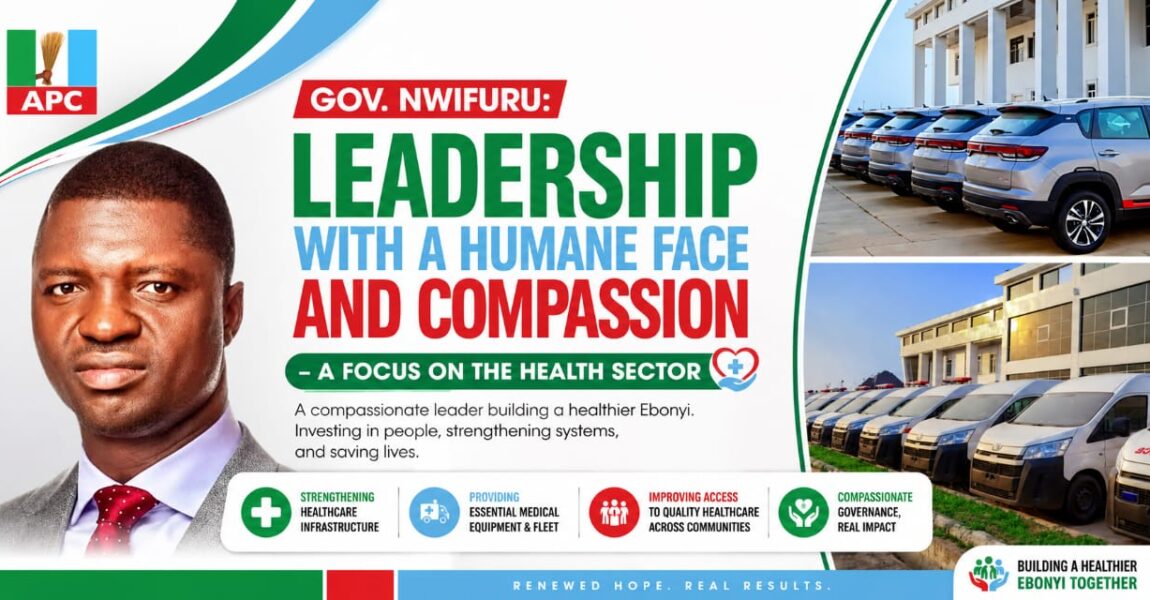
Doctors received official Sport Utility Vehicles (42 SUVs), salary enhancements (including full implementation of the Consolidated Medical Salary Structure in relevant cases and packages rising toward ₦500,000 for certain cadres), and improved staff quarters. These measures aimed to stem brain drain and improve retention, particularly in underserved areas. Motorcycles were also provided for field health workers.
All 13 general hospitals received substantial medical supplies and equipment. The state procured multiple MRI machines and CT scan machines that are now functional, reducing the need for residents to travel outside Ebonyi for advanced diagnostics.
Ambulances were deployed for emergency response. Ongoing revitalisation covers primary healthcare centres; at least 25 PHCs have been upgraded toward higher functionality with staff quarters, alternative power, water, and fencing, while broader efforts target the full network of 171 wards. A Drug Revolving Fund was introduced to improve medicine availability.
The Ebonyi State Health Insurance Agency (EBSHIA) recorded a dramatic expansion. Enrolment rose from approximately 32,149 in 2022 to 137,133 by 2026, a 429 per cent increase.
Between 2023 and 2026 the scheme facilitated hundreds of thousands of encounter visits and services, including over 94,000 antenatal care visits, nearly 26,000 normal deliveries, more than 1,500 Caesarean sections, and treatment of over 113,000 uncomplicated malaria cases, among other interventions. Free maternal and child health services under the scheme have reduced financial barriers at the point of care.
Multiple phases of free surgeries and outreach programmes, often in partnership with the First Lady’s BERWO Foundation, have delivered tangible relief. One phase alone covered 1,283 beneficiaries, including hundreds of hernia repairs, fibroid removals, eye surgeries and screenings. These interventions addressed long-standing conditions that many could not previously afford.
Budgetary allocations to health rose significantly. The state launched a One Health Initiative to strengthen disease prevention across human, animal and environmental interfaces.
Partnerships, including World Bank IMPACT support, have contributed equipment, personnel recruitment, and facility upgrades. Recognition has followed, including national leadership awards for health reforms.
The data from 2023 since governor Nwifuru took over, shows a shift from near-empty facilities and extreme manpower scarcity to expanded enrolment, functional diagnostic capacity, more health workers with better incentives, and direct life-changing surgeries for indigent citizens.
Leadership is best measured by its impact on human lives.
Governor Francis Nwifuru‘s investments in healthcare demonstrate an understanding that governance must prioritize the wellbeing of ordinary citizens.
His administration’s focus on improving healthcare infrastructure, strengthening the workforce, expanding access to quality medical services and supporting vulnerable groups reflects a compassionate approach to governance.
While the healthcare journey is still ongoing and challenges remain, the visible interventions undertaken since 2023 indicate a deliberate commitment to building a stronger, more accessible and people-centred health system.
For many Ebonyi residents, these investments represent more than policy achievements they symbolize hope, improved quality of life and confidence that government can indeed serve with both efficiency and compassion.
Governor Nwifuru’s approach has combined hard infrastructure with soft investments in people, doctors’ welfare, free care for the vulnerable, and insurance expansion that treats health as a right rather than a privilege.