By Dr. Ijeomah Arodiogbu
The week-long Imo State Golden Jubilee Celebration marked a profound milestone in the history of one of Nigeria’s most dynamic regions, commemorating fifty years since the state’s creation on February 3, 1976, by the late General Murtala Muhammed. This event, spanning from February 1 to February 7, 2026, was not merely a festive occasion but a deep reflection on the state’s journey through challenges and triumphs, showcasing its resilience, cultural richness, and contributions to national development. Beginning with an interdenominational thanksgiving service at the Rear Admiral Ndubuisi Kanu Square in Owerri, the celebrations set a tone of gratitude and unity, drawing together religious leaders, government officials, and citizens to acknowledge divine guidance over the decades. Governor Hope Uzodimma, in his address during the opening, emphasized the deliberate choice to start with thanksgiving, highlighting the state’s reliance on faith amid economic, social, and security hurdles that have tested its people since inception.
The significance of this jubilee lay in its ability to foster introspection, celebrating not just survival but substantial progress that positions Imo as a beacon of intellectual, economic, and cultural prowess in the Southeast and beyond. In my view, such commemorations are essential in a nation like Nigeria, where history often gets overshadowed by immediate crises; they remind us that progress is built on acknowledging the past, and Imo’s story is a testament to how regional pride can fuel national unity.
Throughout the week, activities unfolded with a blend of cultural immersion, educational engagement, and communal bonding, each element underscoring the state’s evolution. On February 3, a cultural and stars night at the Eze Imo Palace brought forth vibrant displays of traditional dances, music, and cuisine, evoking nostalgia while affirming the enduring spirit of Ndị Imo. This event highlighted Imo’s role in preserving Igbo heritage, with performances that traced back to the years before the state’s formation, reminding attendees of the cultural foundations that have sustained unity across ethnic and religious lines. An online quiz competition engaged the youth, testing knowledge of Imo’s history and rewarding winners, which symbolized the state’s commitment to education as its greatest asset. Literacy rates in Imo remain among the highest in Nigeria, producing graduates who excel nationally in fields like technology, literature, and governance.
A novelty football match on February 6 at Dan Anyiam Stadium pitted the Imo State House of Assembly against the Association of Local Government Chairmen, ending in a 1-0 victory for the latter, and served as a light-hearted yet symbolic nod to teamwork and progress. These events collectively illustrated the jubilee’s deeper meaning: a platform for renewal, where past achievements inspire future aspirations, reinforcing Imo’s identity as a state of enterprise and innovation. It is my opinion that in an era of digital distraction, incorporating youth-focused activities like quizzes and sports not only educates but also instils a sense of belonging, ensuring that the next generation carries forward the legacy with enthusiasm rather than apathy.
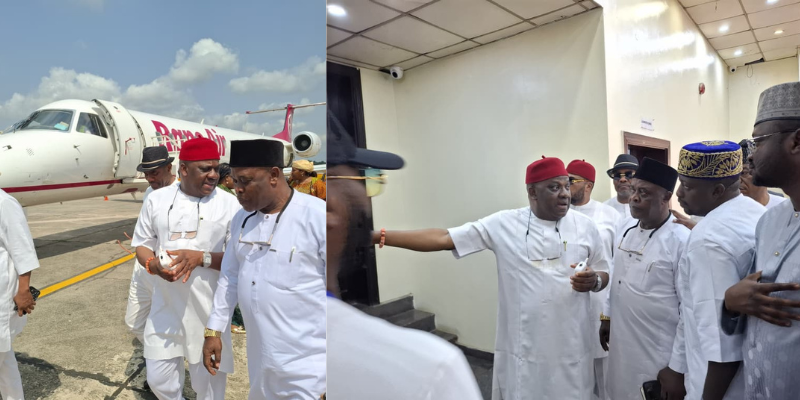
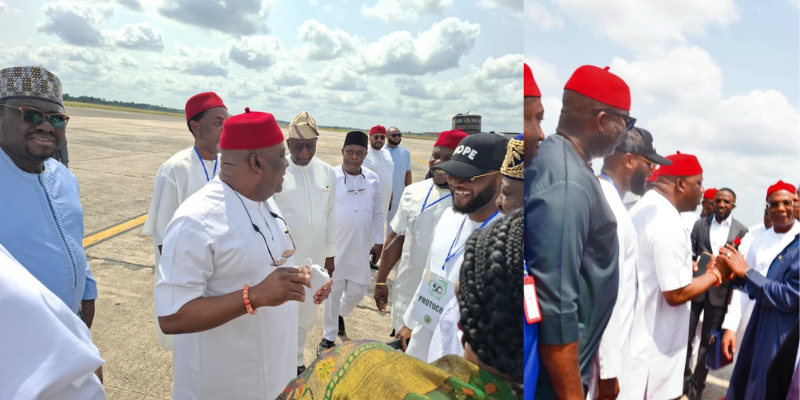
The grand finale on Saturday, February 7, 2026, at Government House in Owerri, epitomized the culmination of this reflective journey, drawing high-profile dignitaries and encapsulating the state’s fifty-year narrative. Vice President Kashim Shettima, representing President Bola Ahmed Tinubu, attended alongside governors from various states, royal fathers, and other notable figures, turning the event into a national convergence. A key highlight was the unveiling of the commemorative book titled “Imo@50:
The Full Story,” a comprehensive chronicle of the state’s political, economic, and cultural evolution since 1976. This publication not only documented milestones but also served as a testament to Imo’s growth from a budget of N259 million in its founding year to N1.4 trillion in 2026, reflecting disciplined reforms and strategic planning. Equally poignant was the awards presentation, honouring fifty distinguished indigenes and friends of the state, both living and posthumous, for their contributions to its development. Recipients included trailblazers in politics, arts, and business, symbolizing gratitude for those who have shaped Imo’s trajectory. The ceremony, filled with speeches and performances, underscored the jubilee’s role in honouring legacy while fostering hope for continued advancement. From my perspective, the presence of such eminent personalities at the finale speaks volumes about Imo’s rising stature; it is not just a local affair but a national endorsement, proving that when a state invests in its narrative, it attracts the alliances needed for sustained growth.
At its core, the significance of the Imo State Golden Jubilee extended beyond pageantry to embody resilience and renewal under visionary leadership. Created amid Nigeria’s post-civil war reconstruction, Imo has navigated economic fluctuations, security challenges, and political transitions, emerging as a hub of intellectual capital. President Tinubu, through Vice President Shettima, hailed the state as Nigeria’s “intellectual engine,” praising its contributions to politics, literature, Nollywood, and agriculture, particularly palm oil production at the historic Ada Palm Plantation. Icons like Flora Nwapa, the mother of modern African literature, and actors such as Genevieve Nnaji and Kanayo O. Kanayo have elevated Imo’s cultural footprint globally.
Economically, the state has leveraged its resources, with internally generated revenue soaring from N226.6 million in 1976 to over N63 billion in 2023, a more than 1,600-fold increase. Institutions like the Federal University of Technology Owerri and Imo State University continue to produce skilled professionals, while Owerri’s emergence as a hospitality centre signals improved security and economic vitality. The jubilee thus served as a “launching pad” for sustaining peace, unity, and good governance, urging the next generation to build on these foundations. I firmly believe that Imo’s journey illustrates a broader lesson for Nigeria: that intellectual and cultural investments yield dividends far beyond financial metrics, creating a ripple effect that strengthens the entire federation against division and stagnation.
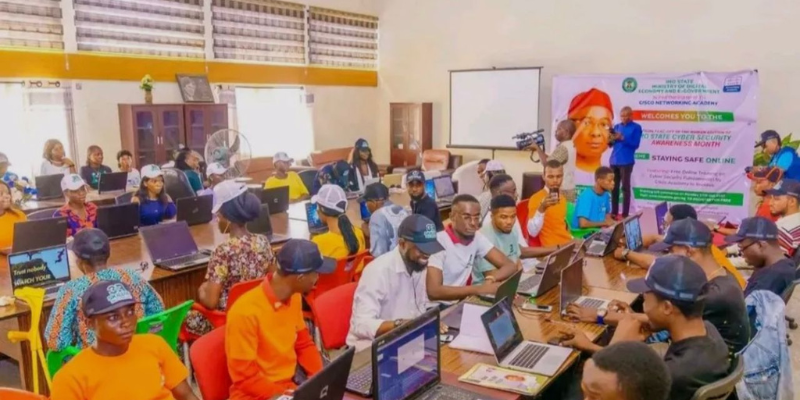
This celebration also highlighted Imo’s integral role in Nigeria’s federation, particularly in the Southeast, where it stands as a model of progress amid regional aspirations. The week-long events promoted inter-ethnic harmony, with calls for unity from leaders like Chief Emeka Anyaoku, who commended the state’s advancements in transportation, finance, and agriculture. By grounding the festivities in thanksgiving and cultural pride, the jubilee reinforced the belief that Imo’s success is intertwined with national unity, echoing the ideals of its founding. It provided a moment to assess challenges like infrastructure gaps and youth unemployment, while celebrating triumphs such as the SkillUp Imo program, which has trained over 65,000 youths in digital skills like artificial intelligence and cybersecurity, positioning the state as Africa’s emerging digital hub.
In essence, the golden jubilee was a narrative of transformation, from humble beginnings under military governors like Rear Admiral Ndubuisi Kanu to a thriving entity ready for the digital age. In my opinion, this event should inspire other states to emulate Imo’s approach, blending cultural reverence with forward-thinking policies, because in a diverse nation like ours, such balanced commemorations can bridge regional divides and foster a collective sense of purpose that transcends politics.
In appreciating the immense support extended by President Bola Ahmed Tinubu to Imo State and other federating units, especially in the Southeast, one cannot overlook the profound impact of his administration’s policies on regional development. President Tinubu has demonstrated unwavering commitment to equitable growth, implementing reforms that yield tangible results across the nation. In Imo, his support has manifested through enhanced federal partnerships in infrastructure and economic initiatives, bolstering the state’s efforts in areas like the Sam Mbakwe International Cargo Airport upgrades and energy Projects.
The majority of Nigerian governors, including those from Imo, Enugu, and Ebonyi, have resolved to back his 2027 bid, citing policies that promote national unity and economic breakthrough. His administration’s focus on security and investment has restored confidence, attracting business and fostering peace in the Southeast. Visits to Imo, such as the commissioning of landmark projects, underscore his dedication, with commendations for the state’s strides under his Renewed Hope Agenda. President Tinubu’s assurance of Imo’s “front-line seat at the national table” during the jubilee reflects his vision for inclusive governance, ensuring the Southeast’s voices are amplified in national discourse.
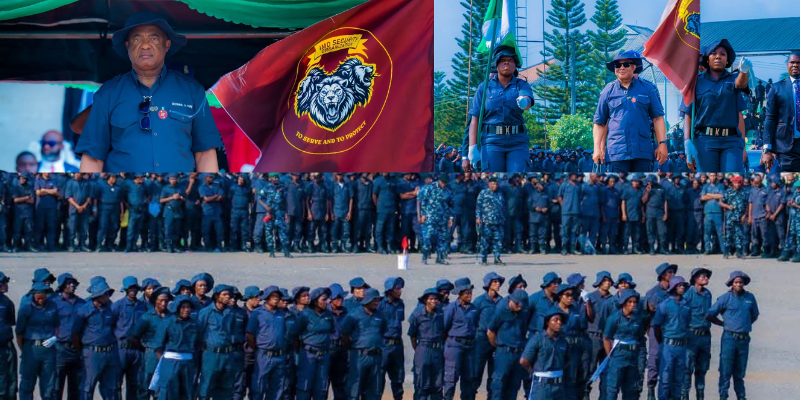
This support extends to broader federal interventions, like the South-East Development Commission’s involvement in regional projects, emphasizing sustainable development. His leadership has inspired hope, not just in Imo but across the Southeast, by addressing long-standing disparities and promoting policies that drive prosperity. It is my strong conviction that President Tinubu’s approach represents a refreshing shift in Nigerian politics, where federalism is not just rhetoric but a practical tool for empowerment, and his backing of Imo exemplifies how targeted support can ignite regional renaissance, ultimately benefiting the entire country.
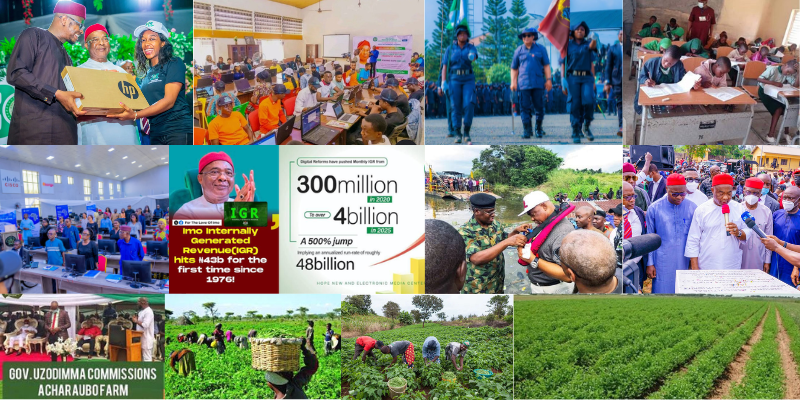
Equally deserving of profound appreciation is Governor Hope Uzodimma, whose giant strides have consistently attracted the high and mighty to Imo State, elevating its profile on the national stage. Under his 3R Agenda of Reconstruction, Rehabilitation, and Recovery, Imo has witnessed unprecedented development in infrastructure, with over 130 major roads completed, transforming connectivity and boosting trade. Healthcare reforms through the Imo State Health Insurance Agency have enrolled hundreds of thousands, achieving significant coverage and introducing innovations like Nigeria’s first Robotic Surgical Centre. In education and youth empowerment, the SkillUp Imo initiative stands out, equipping 65,000 young people with skills in software engineering, fintech, and robotics, fostering a digital economy.
Security enhancements, including donations to families of fallen heroes, have created a stable environment, turning Owerri into a hospitality hub. Fiscal discipline has grown the state’s budget exponentially, while projects like the Orashi Power initiative signal energy sovereignty. His ability to unite stakeholders, as seen in the Southeast’s endorsement of President Tinubu, showcases his influence, making Imo a magnet for investment and collaboration. Indeed, Governor Uzodimma embodies the kind of transformative leadership Nigeria desperately needs more of: pragmatic, inclusive, and results-oriented, proving that with vision and tenacity, even longstanding challenges can be turned into opportunities for excellence.
As we reflect on this golden jubilee, let us pray for a more successful Imo and Nigeria, where unity prevails, innovation thrives, and prosperity is shared by all. May divine wisdom guide our leaders, strengthening the bonds that hold our federation together, and may the next fifty years bring even greater achievements, peace, and fulfilment for every citizen. In this spirit of hope and renewal, Imo and Nigeria will continue to shine as exemplars of resilience and progress. Looking ahead, I am optimistic that the lessons from this celebration will propel Imo toward even bolder horizons, such as becoming a leader in sustainable agriculture and tech innovation, while Nigeria as a whole embraces a future where every region flourishes. The jubilee was more than an event; it was a call to action for all Nigerians to invest in unity and development.
Dr. Ijeomah Arodiogbu is the National Vice-Chairman (South-East) of the All Progressives Congress.